YEREVAN — The traditional geopolitical lens viewing the South Caucasus as a mere battleground for global power influence is increasingly outdated. In a broadcast hosted by media outlet Noyan Tapan and moderated by Gayane Arakelyan, Dr. Anna Ohanyan, the Richard B. Finnegan Distinguished Professor of Political Science and International Relations at Stonehill College, analyzed a major analytical piece from a leading Pakistani newspaper detailing the region's evolving geopolitical architecture.
From Direct Control to Interconnectivity
The core thesis under discussion marks a paradigm shift: while the central question of the past was "who controls the Caucasus," the modern imperative has become "who connects through the Caucasus."
Highlighting three primary competing routes—the Middle Corridor, transit via southern Armenia (TRIPP), and the Iranian route linking the Persian Gulf to the Black Sea through Armenia and Georgia—the analysis notes how transport and digital infrastructure are replacing traditional military-political struggles for spheres of influence.
"The traditional model where great powers exert top-down control over entire regions has significantly weakened," Dr. Ohanyan observed. Pointing to systemic shifts, she emphasized that standard military force no longer easily yields political victories for global superpowers.
"As broad structural power diffuses, regional states possess clear agency. Infrastructure—including digital networks, semiconductor logistics, and AI infrastructure—is emerging as a primary source of international power," she explained. Within Washington’s evolving strategic vision—often termed Pax Silica—Armenia holds a pivotal role in post-Soviet Eurasia's emerging digital and tech infrastructure chains.
South Caucasus vs. Middle Eastern Paradigms
Addressing comparisons drawn between the South Caucasus and the Middle East regarding potential instability or "Syrianization," Dr. Ohanyan rejected direct parallels.
"Middle Eastern conflicts escalated largely due to internal state weakness, systemic fragility, and institutional collapse," she noted. "The states of the South Caucasus maintain distinct structural resilience and state agency. The primary regional risks stem from specific bilateral friction points—such as the Azerbaijan-Israel dynamic relative to Iran—rather than institutional breakdown."
She commended Armenia’s pragmatic diplomatic approach, comparing its balancing act to small, agile states like Kuwait or Oman. By maintaining positive relations simultaneously with Washington and Tehran, Armenian diplomacy has prevented regional friction from forcing a binary zero-sum choice.
Economic Integration, Borders, and Railway Concessions
The discussion extended to internal political statements regarding the non-weaponization of historical issues, such as Genocide recognition, and the economic imperatives of border openings. Open borders with Turkey would unlock substantial economic growth for Armenia, connecting it directly to lucrative European markets.
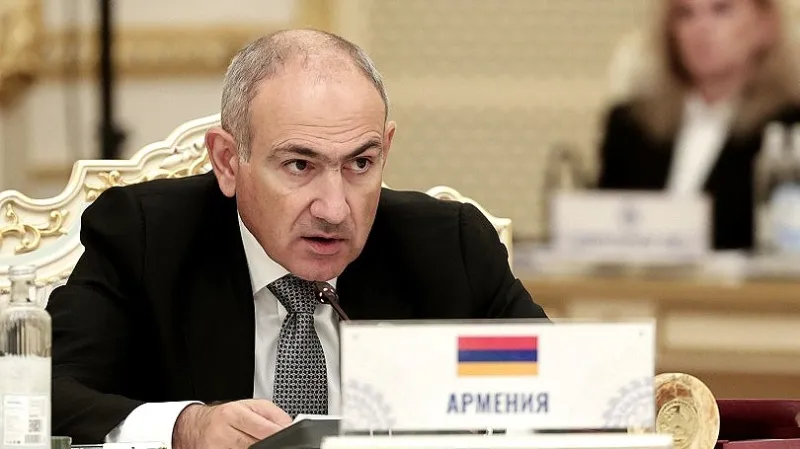
A major topic was Prime Minister Nikol Pashinyan’s call for flexibility regarding Armenia’s railway network, currently managed under a concession by Russian Railways. Pashinyan requested transferring concession rights to an acceptable third country to prevent Armenia from being excluded from international transport networks.
"Russia's current approach to its concessionary rights is short-sighted," Dr. Ohanyan stated. "By choosing sabotage or failing to invest, Moscow risks isolating itself. Resolving this requires active diplomatic engagement, identifying clear economic gains for Moscow if the line integrates into broader Eurasian trade, and pursuing alternative regional connectivity routes."
Ultimately, the interview underscored that economic interlinkages and regional stability are not just preferred outcomes, but prerequisites for keeping trade, energy, and digital corridors operational across Eurasia.